Privacy Policy – African Fauna Odyssey Safaris
Privacy Policy – African Fauna Odyssey Safaris
1. Introduction
Welcome to African Fauna Odyssey Safaris. We value your privacy and are committed to protecting the personal information you share with us when visiting our website, requesting travel information, booking a safari, arranging a Mount Kilimanjaro climbing expedition, or using any of our travel services.
This Privacy Policy explains how African Fauna Odyssey Safaris collects, uses, stores, and protects your personal information. It also explains your rights regarding your personal data and how you can contact us with questions about our privacy practices.
By using our website at https://africanfaunaodysseysafaris.com or communicating with our team, you acknowledge the privacy practices described in this policy.
2. Information We Collect
When you contact African Fauna Odyssey Safaris or use our website, we may collect personal information necessary to respond to your enquiries, arrange travel services, and manage reservations.
The information we may collect includes:
- Full name and contact information.
- Email address and telephone number.
- Country of residence or nationality.
- Preferred travel dates and destinations.
- Number of travellers and group details.
- Safari, Kilimanjaro climbing, or Zanzibar holiday preferences.
- Accommodation and transportation requirements.
- Passport details and other travel documents when necessary for bookings.
- Dietary requirements, accessibility needs, and relevant health information voluntarily provided for travel arrangements.
- Payment details, transaction references, and booking records.
- Messages, enquiries, and other communications with our team.
We may also collect limited technical information, such as your IP address, browser type, device information, website activity, and referral sources, depending on the technologies used on our website.
We aim to collect only the information reasonably necessary to provide our services and improve your experience.
3. How We Use Your Personal Information
African Fauna Odyssey Safaris uses personal information for legitimate business purposes connected with providing travel and tourism services.
We may use your information to:
- Respond to enquiries about Tanzania safaris, Kilimanjaro climbing, Zanzibar holidays, and other travel experiences.
- Prepare personalized travel itineraries and quotations.
- Process and manage bookings and reservations.
- Arrange accommodation, transportation, park visits, guides, and other travel services.
- Communicate booking confirmations, travel updates, and important information.
- Process payments, refunds, and financial records.
- Assist with travel-related emergencies and special requirements.
- Improve our website, customer service, and travel experiences.
- Comply with applicable legal, regulatory, accounting, and tax obligations.
- Send promotional information or travel offers where permitted by law and in accordance with your communication preferences.
We do not use your personal information for purposes that are incompatible with the reasons it was collected without an appropriate legal basis.
4. Booking and Reservation Information
When you book a safari, Kilimanjaro climbing expedition, or another travel experience with African Fauna Odyssey Safaris, we may request additional information necessary to organize your trip.
Depending on the services booked, this may include passport information, arrival and departure details, accommodation preferences, emergency contact information, and other relevant travel requirements.
Certain information may be shared with hotels, lodges, transportation providers, national park authorities, professional guides, or other service providers involved in delivering your travel arrangements.
We share only the information reasonably necessary for these services and expect our service providers to handle personal information responsibly.
5. Payment Information and Security
African Fauna Odyssey Safaris may collect payment-related information when customers make deposits, settle booking balances, or request refunds.
Payments may be processed through banks, payment service providers, or other authorized payment channels.
Where third-party payment providers are used, payment information may be processed according to their own privacy and security policies.
We take reasonable measures to protect financial records and booking information from unauthorized access, misuse, alteration, or disclosure.
Customers should use only payment instructions officially communicated by African Fauna Odyssey Safaris and contact our team if they receive suspicious payment requests.
6. Cookies and Website Technologies
Our website may use cookies and similar technologies to support website functionality, understand visitor activity, and improve the browsing experience.
Cookies are small files stored on your device when you visit a website.
Depending on the tools installed on our website, cookies may be used to remember visitor preferences, support essential website functions, measure website performance, and analyze visitor interactions.
Some cookies may be provided by third-party services, such as website analytics, embedded content, or marketing platforms.
You can manage or disable cookies through your browser settings. However, disabling certain cookies may affect how some website features operate.
Where required by applicable law, we will request your consent before using non-essential cookies.
7. Sharing Information With Third Parties
African Fauna Odyssey Safaris does not sell your personal information to third parties.
However, we may share relevant information with trusted organizations and service providers when necessary to deliver our travel services.
These may include:
- Hotels, lodges, camps, and accommodation providers.
- Safari guides and transportation operators.
- National park and conservation authorities.
- Airlines and airport transfer providers.
- Payment processors and banking institutions.
- Website hosting, email, and technology service providers.
- Government or regulatory authorities when legally required.
We aim to limit information sharing to what is necessary for the relevant service or legal obligation.
Some service providers may operate outside Tanzania. Where personal information is transferred internationally, we will take appropriate steps to comply with applicable data protection requirements.
8. Protection of Personal Information
We recognize the importance of keeping customer information secure.
African Fauna Odyssey Safaris takes reasonable administrative, technical, and organizational precautions to protect personal information against unauthorized access, loss, misuse, or disclosure.
Access to personal information should be limited to authorized personnel and service providers who require it to perform their responsibilities.
Although we take reasonable precautions, no website, electronic communication, or internet-based storage system can be guaranteed to be completely secure.
We encourage customers to avoid sending sensitive payment information through unsecured communication channels.
9. How Long We Keep Your Information
We retain personal information only for as long as reasonably necessary to fulfill the purposes described in this Privacy Policy, including providing travel services, maintaining booking records, resolving disputes, and meeting applicable legal obligations.
The retention period may vary depending on the type of information, the services provided, and relevant accounting, tax, or regulatory requirements.
When information is no longer required, we aim to securely delete, anonymize, or otherwise dispose of it in accordance with applicable requirements.
10. Your Privacy Rights
Depending on applicable data protection laws, you may have certain rights regarding the personal information we hold about you.
These may include the right to:
- Request access to your personal information.
- Ask us to correct inaccurate or incomplete information.
- Request deletion of personal information where legally permitted.
- Object to or request restrictions on certain uses of your information.
- Withdraw consent where processing is based on consent.
- Request information about how your personal data is used or shared.
- Raise concerns or complaints with the relevant data protection authority.
Some requests may be subject to legal exceptions, including requirements to retain booking, financial, or regulatory records.
To exercise your privacy rights, please contact us using the details provided below.
11. Children’s Privacy
African Fauna Odyssey Safaris offers family-friendly travel experiences, including safaris and other activities suitable for children.
When arranging travel for minors, we may collect limited information necessary to provide the requested services, normally through a parent, guardian, or authorized adult.
We do not knowingly collect personal information directly from children without appropriate authorization where required by law.
Parents or guardians who have concerns about information relating to a minor may contact us for assistance.
12. Third-Party Websites and External Links
Our website may contain links to third-party websites, including accommodation providers, tourism organizations, travel resources, and other external services.
These websites operate independently and may have their own privacy policies and information-handling practices.
African Fauna Odyssey Safaris is not responsible for the privacy practices, security measures, or content of third-party websites.
We encourage visitors to review the privacy policies of external websites before submitting personal information.
13. Marketing Communications
From time to time, African Fauna Odyssey Safaris may share travel updates, new safari packages, special offers, or other information relating to our services.
We will send marketing communications only where permitted under applicable law.
If you no longer wish to receive promotional messages, you may request removal from our marketing communications by contacting us directly or using an unsubscribe option where available.
Unsubscribing from promotional messages will not prevent us from sending essential communications relating to an existing booking or enquiry.
14. International Visitors and Data Protection
African Fauna Odyssey Safaris welcomes travellers from different countries and recognizes that privacy requirements may vary across jurisdictions.
We aim to handle personal information in accordance with applicable laws, including Tanzania’s Personal Data Protection Act, 2022, and other data protection requirements that may apply to our activities.
Where additional privacy rights or obligations apply to visitors from particular countries, we will seek to respect those requirements.
15. Changes to This Privacy Policy
African Fauna Odyssey Safaris may update this Privacy Policy periodically to reflect changes in our services, website technologies, operational practices, or applicable legal requirements.
Any updates will be published on this page, together with a revised last-updated date.
We encourage visitors to review this page occasionally to stay informed about how their personal information is handled.
16. Contact Us
If you have questions about this Privacy Policy, wish to request access to your personal information, or have concerns about how your data is handled, please contact us.
African Fauna Odyssey Safaris
Location: Tanzania, East Africa
Website: https://africanfaunaodysseysafaris.com
Email: info@africanfaunaodysseysafaris.com
Phone: +255 741 559 000 / +255 772 713 454
We will make reasonable efforts to respond to privacy-related enquiries and requests in accordance with applicable legal requirements.
African Fauna Odyssey Safaris – Your Privacy Matters to Us
We appreciate the trust you place in African Fauna Odyssey Safaris when planning your Tanzania safari, Mount Kilimanjaro climbing adventure, or Zanzibar holiday. We are committed to handling your personal information responsibly and maintaining a professional, transparent relationship with every traveller.
Frequently Asked Questions
Planning a trip to Tanzania? Find answers to common questions about wildlife safaris, climbing Mount Kilimanjaro, and relaxing on Zanzibar's beautiful beaches. Our guide will help you prepare for your holiday.
Tanzania Safari Questions
Everything you need to know before going on a wildlife safari in Tanzania.
The best time depends on the wildlife you want to see and the places you plan to visit. The dry season, generally from June to October, is popular because vegetation is thinner and animals often gather near water sources.
January to March can also be excellent, especially in the southern Serengeti and Ndutu area during the wildebeest calving season. Wildlife viewing is possible throughout the year, although weather and road conditions vary by season.
A 3–4 day safari can work well for travellers with limited time. You can visit selected northern Tanzania parks, depending on your starting point and travel schedule.
For a more relaxed experience, we generally recommend 5–8 days. This allows more time for game drives and destinations such as Serengeti National Park, Ngorongoro Crater, Tarangire National Park and Lake Manyara.
Longer safaris of 9 days or more provide additional flexibility for cultural visits, photography and extended wildlife viewing.
Serengeti National Park is famous for its vast plains, predators and the Great Wildebeest Migration. Ngorongoro Crater is known for its remarkable concentration of wildlife within a volcanic caldera.
Tarangire National Park is particularly well known for elephants, baobab trees and seasonal wildlife concentrations. Lake Manyara National Park offers varied habitats, birdlife and beautiful scenery.
For travellers seeking less crowded areas, parks such as Nyerere National Park and Ruaha National Park may also be worth considering.
Yes. Tanzania is home to the lion, leopard, elephant, buffalo and rhinoceros, collectively known as the Big Five.
However, sightings are never guaranteed because wildlife moves freely. Lions, elephants and buffalo are regularly seen in several parks, while leopards can be difficult to spot. Black rhinos are rare and are particularly associated with protected areas such as Ngorongoro Crater.
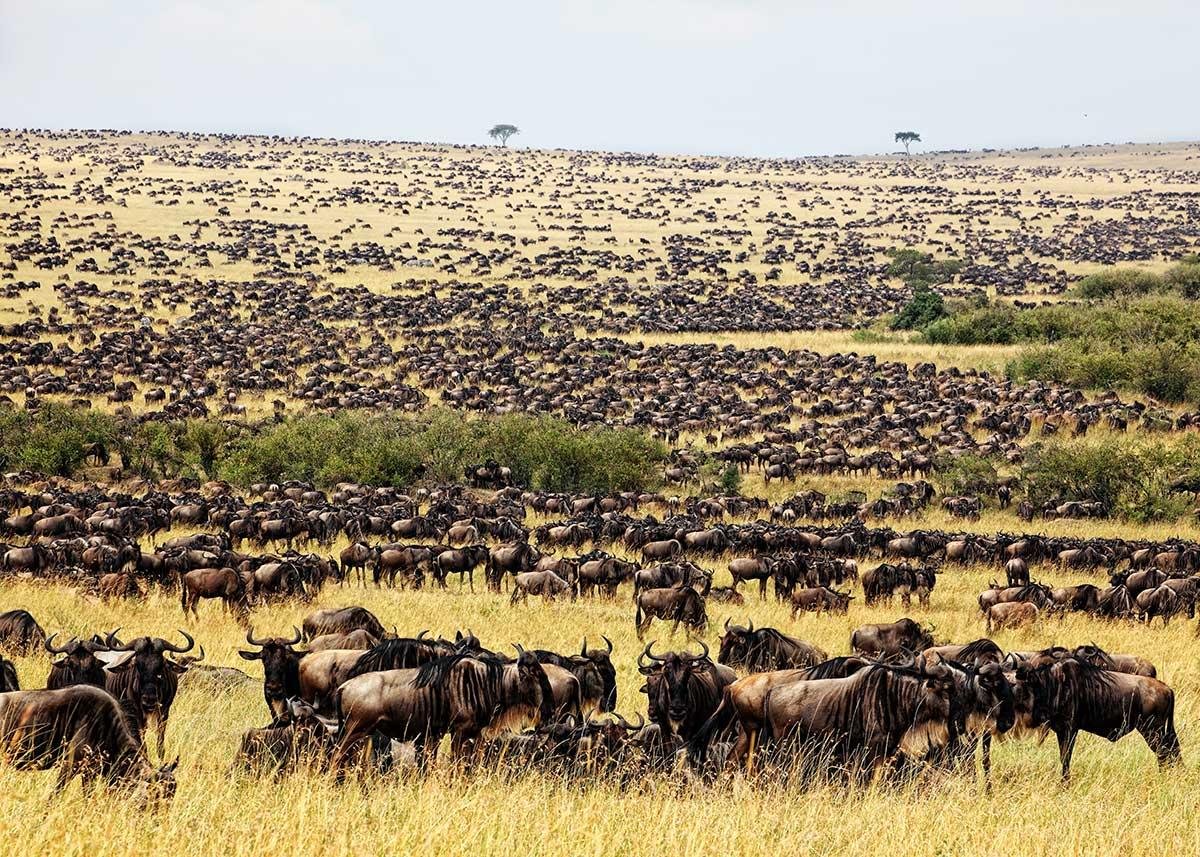
The Great Wildebeest Migration is a year-round movement of wildebeest and other grazing animals through the Serengeti–Mara ecosystem. Their location changes according to rainfall and grazing conditions.
January–March: Herds are often found around the southern Serengeti and Ndutu during calving season.
April–June: Many herds move through central and western areas.
July–October: Herds may gather in the northern Serengeti, where Mara River crossings can occur.
November–December: Herds generally begin moving south again as seasonal rains return.
These are approximate patterns. River crossings and specific sightings cannot be guaranteed.
Safari prices depend on the number of days, accommodation standard, travel season, group size, park fees and whether the trip is private or shared.
Budget camping safaris are generally less expensive than lodge-based mid-range trips, while luxury safaris may include premium accommodation, fly-in transfers and additional services.
For an accurate quotation, share your preferred travel dates, number of travellers, desired accommodation standard and the parks you would like to visit. We can then prepare an itinerary based on your requirements.
Tanzania is an established safari destination, and many international travellers visit its national parks each year. However, travel and wildlife activities involve risks, so following safety guidance is important.
Always follow your guide's instructions, remain inside the vehicle when required, avoid approaching wild animals and respect the rules at camps and lodges.
We also recommend checking your government's current travel advice before departure and purchasing suitable travel insurance.
Pack lightweight, comfortable clothing in neutral colours, a warm jacket for early morning game drives, comfortable closed shoes, sunscreen, sunglasses and a wide-brimmed hat.
Other useful items include binoculars, a camera, insect repellent, personal medication, a reusable water bottle and a small daypack.
If you are taking a domestic flight, check the airline's baggage restrictions before packing.
Visa requirements depend on your nationality. Some visitors can obtain an eVisa or visa on arrival, while others must arrange permission before travelling. Check the official Tanzania Immigration eVisa portal for current requirements.
Yellow fever vaccination documentation may be required depending on your travel history and transit route. You should also speak with a qualified travel-health professional about malaria prevention and other recommended vaccinations.
Ensure your passport meets the applicable entry requirements and that you have sufficient travel insurance.
Yes. Many travellers combine a wildlife safari with a Zanzibar beach holiday or a Mount Kilimanjaro climbing expedition.
A popular option is to spend several days exploring northern Tanzania's national parks before flying to Zanzibar for relaxation. Travellers climbing Kilimanjaro may also add a safari or beach holiday after their trek.
We can help plan the order of activities, transfers and suitable travel dates based on your available time.
Mount Kilimanjaro Climbing Questions
Useful information about routes, altitude, preparation and trekking conditions.
Mount Kilimanjaro is a demanding high-altitude trek, but the standard trekking routes do not usually require technical mountaineering skills.
The main challenges are the altitude, long walking days, changing weather and physical effort required during the summit attempt.
Good preparation, appropriate equipment, an itinerary that allows time for acclimatisation and following your mountain guide's instructions are important. Even fit climbers can experience altitude sickness.
The most popular climbing periods are generally January to early March and June to October, when conditions are often comparatively drier.
However, Kilimanjaro weather is unpredictable. Rain, strong winds, freezing temperatures and snow can occur at high elevations even during the drier months.
Climbing is possible at other times, but wetter conditions can make trails more difficult.
The best route depends on your fitness, trekking experience, available days and accommodation preference.
Lemosho Route: Known for its scenic western approach and varied landscapes.
Machame Route: A popular camping route with dramatic scenery and the famous Barranco Wall.
Marangu Route: The main route offering overnight accommodation in mountain huts.
Rongai Route: Approaches the mountain from the north and is often quieter.
Umbwe Route: A steep and demanding approach generally more suitable for experienced trekkers.
Northern Circuit: Offers remote scenery and, on longer itineraries, more time for acclimatisation.
For many climbers, choosing a longer itinerary is more important than simply choosing the shortest route.
Most Kilimanjaro trekking itineraries take approximately 5 to 9 days on the mountain, depending on the route.
Six-day Marangu and seven-day Machame itineraries are common examples. Eight-day Lemosho trips offer additional time on the mountain.
Longer routes can provide better opportunities to acclimatise, although they do not eliminate altitude-related risks. It is also sensible to allow time before and after the climb for arrival, preparation and rest.
Previous technical climbing experience is not normally required for Kilimanjaro's standard trekking routes. However, experience with long hikes and multi-day trekking is helpful.
You should be comfortable walking for several hours on uneven terrain and carrying a small daypack.
We recommend preparing with regular hiking, cardiovascular exercise and strength training. Travellers with relevant medical conditions should seek advice from their healthcare professional before booking.
Altitude sickness can occur when the body does not adjust adequately to reduced oxygen availability at higher elevations. Symptoms may include headache, nausea, dizziness, fatigue and difficulty sleeping.
Choosing an itinerary with sufficient acclimatisation time, ascending gradually, staying appropriately hydrated and following your guide's instructions can help reduce risk.
Altitude sickness can become life-threatening. Inform your guide immediately about symptoms. Severe or worsening symptoms require urgent assessment and descent; do not continue ascending when advised to descend.
Ask a qualified medical professional about altitude-related medication before travelling. Medication is not a substitute for safe ascent practices.
Essential items include well-fitted hiking boots, thermal base layers, insulating clothing, a waterproof jacket and trousers, warm gloves, a winter hat, a headlamp and a suitable sleeping bag.
You will also need a daypack, water containers, sunglasses, high-SPF sunscreen and personal toiletries.
Summit temperatures can be well below freezing, so proper cold-weather equipment is essential. Ask your tour operator for a detailed packing list and information about any equipment available for hire.
Accommodation depends on the climbing route. The Marangu Route uses designated mountain huts, generally with shared sleeping facilities.
Routes such as Machame, Lemosho, Rongai and Umbwe normally use designated campsites with tents.
Facilities are basic compared with hotels, and conditions become colder as you gain altitude. Your itinerary should explain what camping equipment and services are included.
Some first-time high-altitude trekkers successfully reach Uhuru Peak, but summit success is never guaranteed.
Your physical condition, altitude response, weather, route duration and preparation all influence the experience.
Beginners should choose an appropriate itinerary, train in advance and understand that turning back for health or safety reasons is always the right decision when necessary.
The cost depends on the route, number of trekking days, group size, park fees, accommodation arrangements, equipment and services included.
A complete quotation should clearly explain park fees, guide and porter services, meals, mountain accommodation, transfers and any additional costs.
When comparing prices, consider the operator's safety arrangements, crew welfare, equipment quality and the time allowed for acclimatisation rather than selecting a trip based on price alone.
Zanzibar Beach Holiday Questions
Helpful answers about beaches, accommodation, activities and island travel.
Zanzibar is a warm tropical destination throughout the year. The periods from June to October and December to February are particularly popular for beach holidays.
March to May is generally the wetter season, while November often brings shorter seasonal rains.
Weather conditions vary, so the best travel dates depend on your preferred activities, accommodation budget and tolerance for occasional rain.
Nungwi: Popular for beach resorts, restaurants and swimming opportunities.
Kendwa: Known for its sandy beach, sunsets and comparatively favourable swimming conditions at many tide levels.
Paje: Popular for kitesurfing, beach cafés and a lively coastal atmosphere.
Jambiani: Offers a quieter village setting with guesthouses and a relaxed atmosphere.
Matemwe: Known for its peaceful coastline and access to excursions around Mnemba Atoll.
Beach conditions and swimming access vary with tides, weather and the specific property location.
For a short beach break after a safari, 3–4 days can be enough to relax and enjoy selected activities.
A stay of 5–7 days gives you more time to explore Stone Town, enjoy beach excursions, visit cultural attractions and spend quiet days at your hotel.
Travellers who want to visit different coastal areas or enjoy a longer honeymoon may prefer a week or more.
Zanzibar offers much more than beach relaxation. Popular activities include snorkelling, scuba diving, dhow boat excursions, spice farm tours and guided walks through historic Stone Town.
Depending on your interests, you may also enjoy visiting Jozani Forest, exploring local villages, trying Swahili cuisine or taking a sunset cruise.
Marine excursions depend on weather and sea conditions. Choose responsible operators who follow local conservation and wildlife protection rules.
Yes. Zanzibar is a popular destination for couples because of its tropical beaches, ocean views, boutique hotels and luxury resorts.
Honeymoon activities can include private beach dinners, sunset cruises, spa treatments, snorkelling and relaxing days by the Indian Ocean.
Many couples also combine Zanzibar with a Tanzania wildlife safari for a holiday that includes both adventure and beach relaxation.
Yes. Depending on your safari itinerary, you may be able to fly to Zanzibar from Arusha, Kilimanjaro, Dar es Salaam or selected airstrips serving safari destinations.
Some routes are direct, while others require a connection. Flight schedules and availability vary.
We recommend arranging your safari and Zanzibar transfers together so that travel times, baggage allowances and hotel check-in arrangements are coordinated.
Zanzibar is a well-established tourist destination, but visitors should take normal travel precautions.
Keep valuables secure, use reputable transport providers, avoid isolated areas after dark and follow local guidance when swimming or taking boat excursions.
Respect local customs, particularly when visiting villages and Stone Town. Modest clothing is recommended away from beach resorts.
Check current travel advice and maintain appropriate travel insurance throughout your stay.
Zanzibar is part of the United Republic of Tanzania, so visitors generally use the applicable Tanzanian immigration permission rather than a separate Zanzibar visa.
However, Zanzibar has introduced mandatory inbound travel insurance for many foreign visitors, which may be required even when you already hold private travel insurance. Requirements and exemptions can change.
Before departure, verify the latest conditions through the official Zanzibar tourism portal and the relevant immigration or insurance authorities.
Pack lightweight clothing, swimwear, sandals, sunscreen, sunglasses, a sun hat and comfortable shoes for sightseeing.
Bring modest clothing for visits to Stone Town and local communities, as well as insect repellent and any personal medication.
A waterproof bag can be useful for boat trips, and reef-safe sun protection is worth considering for marine activities.
Yes. A Tanzania safari followed by Zanzibar is a popular family holiday combination.
Families can enjoy wildlife viewing in parks such as Tarangire, Serengeti and Ngorongoro before travelling to Zanzibar for beach activities and relaxation.
When travelling with children, consider shorter driving days, suitable accommodation, age restrictions for activities and safe swimming conditions. We can help you plan an itinerary that suits your family's needs.
Still Have Questions About Your Tanzania Holiday?
Our team can help you choose a safari itinerary, compare Kilimanjaro routes, or plan a Zanzibar beach holiday. Contact us to discuss your travel dates and preferences.